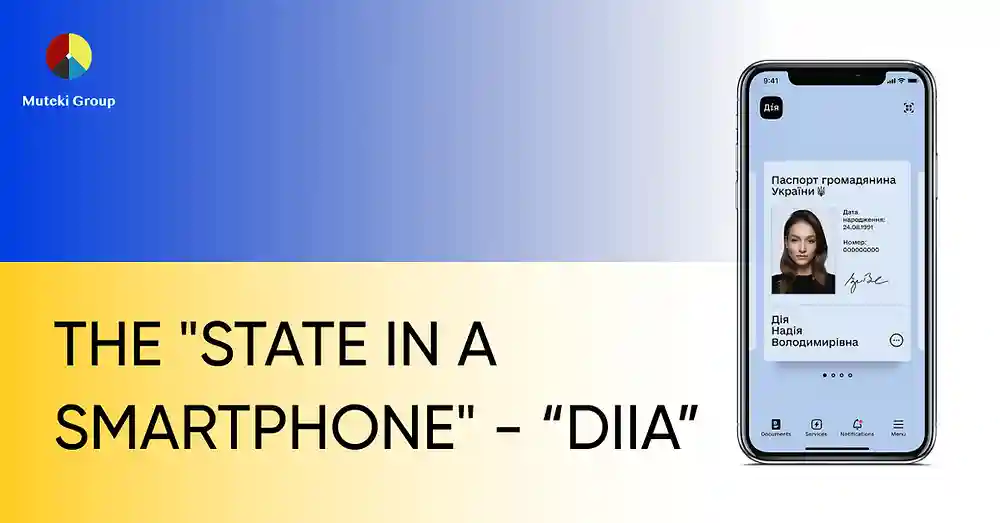
The Diia Ukraine mobile ecosystem represents a revolutionary leap in public administration, transforming state bureaucracy into an intuitive digital experience. This comprehensive guide examines how Ukraine’s pioneering e-governance architecture, digital identity frameworks, wartime technical resilience, and open-source civic software are setting a transformative global benchmark for modern digital governance.
What Is Diia Ukraine and How Does the State in a Smartphone Work?
In global digital transformation, the Diia Ukraine application stands as a celebrated milestone, demonstrating how mobile engineering reinvents public governance. Developed by Ukraine’s Ministry of Digital Transformation, Diia—an acronym for “Derzhava i Ya” (“The State and Me”)—ushers in an era where administrative bureaucracy is transformed into an intuitive, user-centric mobile ecosystem.
Widely known as the “State in a Smartphone”, the platform serves as a secure digital highway connecting over 20 million citizens directly to state registries, legal documentation, and essential public utilities. By replacing paperwork with encrypted data exchanges, it sets a global standard for digital democracy.

Table of Contents
- Why Has Diia Revolutionized Public Services and E-Governance?
- How Does Diia’s Underlying Security Architecture Function?
- What Are the Key Adoption Metrics and Milestones of Diia?
- How Did Diia Become a Cornerstone of Wartime Resilience?
- Which Next-Generation Digital Services and AI Features Are Coming to Diia?
- Why Is Diia’s Open-Source Architecture a Model for Governments?
- Frequently Asked Questions About Diia Ukraine
- How Can Global Enterprises Leverage Ukrainian Tech Innovation with Muteki Group?
Why Has Diia Revolutionized Public Services and E-Governance?
The primary architectural mission of Diia Ukraine is the total elimination of physical paperwork, administrative queues, and discretionary corruption. By migrating government registries into synchronized, API-driven cloud architectures, Ukraine saves millions of citizen hours annually while establishing a transparent governance model with immutable audit trails.
Ukraine achieved international legal history by becoming the first sovereign nation globally to grant digital passports and driver’s licenses the exact same legal status as physical documents. From automated business formation to digital border crossings, the framework eliminates administrative friction.
How Does Diia’s Underlying Security Architecture Function?
Architecturally, the platform operates on a decentralized, zero-storage paradigm powered by the “Trembita” data exchange bus:
- Decentralized Verification: The app does not store personal data on external servers. It queries encrypted records from state registries in real time and caches them ephemerally on the device.
- Dynamic QR Code Generation: For document verification, the app generates single-use dynamic QR codes that expire within three minutes, preventing spoofing and theft.
- Multi-Factor Biometrics: Signatures utilize Mobile ID and BankID with biometric liveness detection, enabling legally binding signatures on smartphones.
What Are the Key Adoption Metrics and Milestones of Diia?
Verified metrics highlight the societal and economic impact achieved by Diia Ukraine across peacetime and crisis governance:
| Digital Government Service | Verified Adoption Metric | Global & European Ranking |
|---|---|---|
| Digital ID Cards & Passports | Over 13 million digital passport users | First country globally with legally equal digital IDs |
| Digital Driving Licenses | 7+ million digital licenses registered | Top 4 in Europe for digital vehicle documentation |
| Automated Business Registration | Over 300,000 digital businesses launched | Fastest automated sole proprietorship registration globally (under 2 seconds) |
| Crisis & Emergency Support | Millions of housing damage claims processed | Pioneering digital civic resilience infrastructure during wartime |
“Diia is not just a mobile application; it is a foundational instrument of national resilience and technological sovereignty, proving that digital innovation can outpace traditional bureaucracy even under extreme adversity.” — Ministry of Digital Transformation of Ukraine
How Did Diia Become a Cornerstone of Wartime Resilience?
During wartime, Ukrainian engineers rapidly deployed critical civic survival tools:
- eVoroh (“eEnemy”) Chatbot: A secure tool allowing verified citizens to report military hardware via automated intelligence filters.
- eRecovery (eVidnovlennya): Enables homeowners to submit smartphone photos of damaged property, receive digital inspections, and collect reconstruction funds directly.
- Digital Evacuation Documents: A temporary digital credential (“eDocument”) recognized at border crossings when citizens lack physical documents.
Which Next-Generation Digital Services and AI Features Are Coming to Diia?
Continuing its technical roadmap, the platform is actively integrating modern artificial intelligence and automated civil registry services:
- Fully Digital Customs Clearance: Automated vehicle import workflows that calculate duties programmatically, eliminating customs officer discretion and preventing tariff manipulation.
- Remote Digital Marriage Registrations: The world’s first end-to-end digital civil marriage service conducted entirely via secure video verification and cryptographic digital signatures.
- AI-Powered Virtual Civic Assistant (Nadia): An advanced conversational AI assistant designed to deliver instant, personalized civic guidance across thousands of complex administrative procedures.
- Digital Education & Mriya Ecosystem: Comprehensive educational portfolios for students, parents, and educators.
Why Is Diia’s Open-Source Architecture a Model for Governments?
In a landmark move for international transparency, Ukraine open-sourced the core codebase of Diia Ukraine on GitHub, creating a reusable e-governance framework adopted by nations including Estonia, Colombia, and Zambia.
This proves civic software can be agile, secure, and built with modern microservices rather than legacy vendor lock-in.
Frequently Asked Questions About Diia Ukraine
What Is Diia Ukraine and Who Developed the Application?
Diia Ukraine is an official e-governance ecosystem developed by Ukraine’s Ministry of Digital Transformation. Launched in 2020, it integrates digital passports, driver’s licenses, business formation, and hundreds of public services into a single mobile application and web portal for Ukrainian citizens and businesses.
How Does Diia Ensure Citizen Data Privacy and Security?
The platform does not centralize or store citizen data on private application servers. Instead, it queries decentralized state registries in real time via the Trembita encrypted data bus. All displayed credentials use ephemeral, short-lived QR codes and biometric verification, preventing unauthorized data interception or identity theft.
Why Is Diia Recognized as a Pioneer in Global E-Governance?
Ukraine was the first country in the world to establish legal equivalence between digital passports and physical ID documents. Furthermore, Diia Ukraine enables automated business registration in under two seconds and provides the world’s first fully digital civil marriage process, setting an international benchmark for administrative speed.
When Was Diia Ukraine Launched and How Many Citizens Use It?
The platform was officially launched in February 2020. Over 20 million active users utilize the application today across Ukraine.
How Can Other Nations Adopt the Diia Ukraine Open-Source Architecture?
Governments can study and adapt the framework through its open-source codebase released on GitHub. Partner nations collaborate with Ukrainian teams to adapt its microservices, authentication layers, and registry connectors.
How Can Global Enterprises Leverage Ukrainian Tech Innovation with Muteki Group?
The remarkable global success of Diia Ukraine highlights the world-class engineering capability and technological ingenuity of Ukrainian software developers. For global enterprises seeking to build high-performance Web, Mobile, and AI platforms, experienced engineering partners accelerate time-to-market.
Muteki Group leverages deep roots in Ukraine’s world-leading tech ecosystem—powered by 80+ senior in-house engineers and a network of 250,000+ developers globally. Contact our senior engineering leaders at Muteki Group Contact Page to schedule an executive technical discovery session today.