AR/VR Development: 5 Ultimate Secrets for Proven Success
Augmented Reality (AR), Virtual Reality (VR), and Mixed Reality (MR)—collectively referred to as Spatial Computing—represent a fundamental shift in human-computer interaction. Rather than confining digital assets to two-dimensional screens, spatial computing overlays contextual data onto the physical world or embeds users in fully simulated 3D environments. At Muteki Group, we specialize in high-performance AR/VR development and custom virtual reality development tailored to streamline industrial workflows, accelerate technical training, elevate consumer engagement, and provide real-time spatial data visualization for organizations globally.
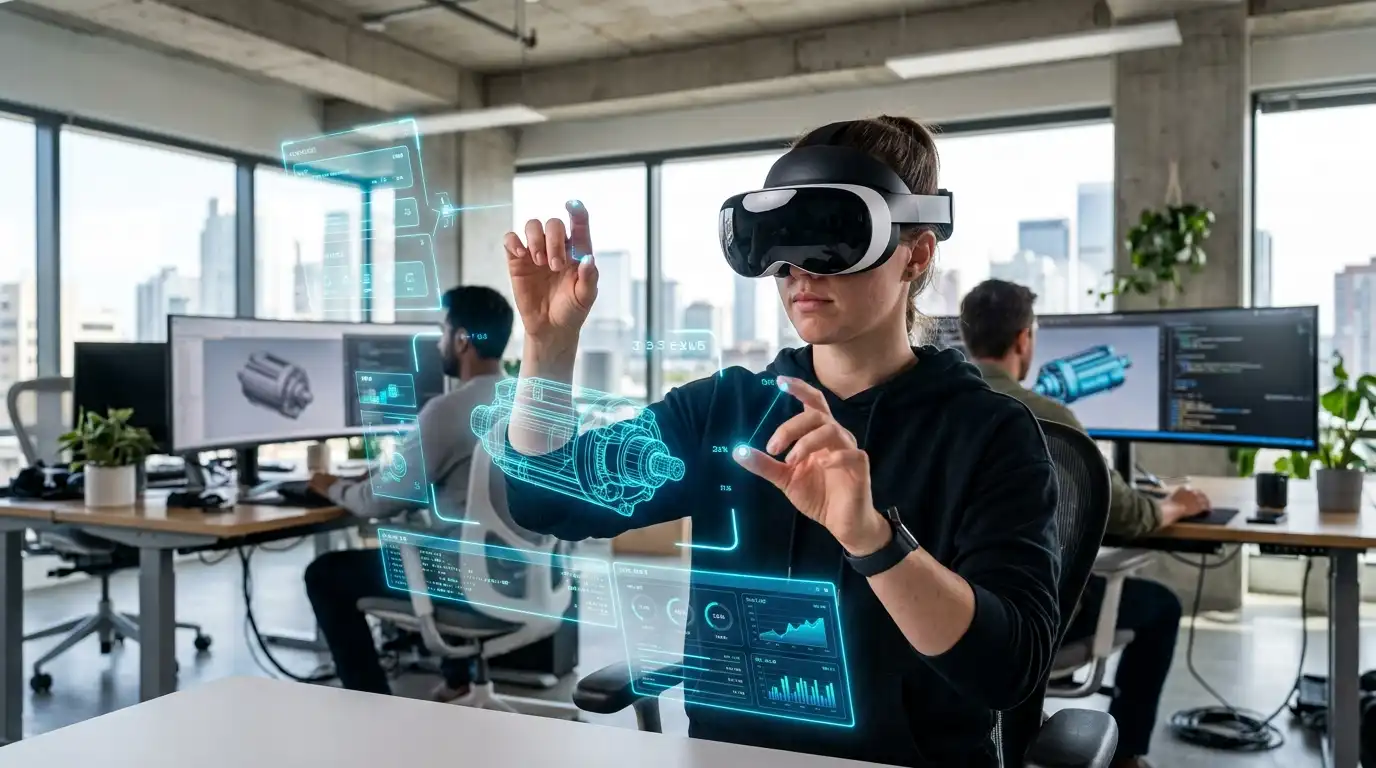
Table of Contents
- Realizing the Technical and Commercial Potential of AR/VR
- Key Services in AR/VR and Virtual Reality Development
- Industry Applications & Strategic Insights
- Why Choose Muteki Group for AR/VR Development?
- Muteki Group’s Technical Edge in Virtual Reality Development
- The AR/VR Development Lifecycle
- Frequently Asked Questions (FAQ)
Realizing the Technical and Commercial Potential of AR/VR
Since 2015, Muteki Group has engineered robust spatial computing solutions, taking projects from initial architectural design to deployment on enterprise head-mounted displays (HMDs) and mobile devices. Our distributed engineering teams operate across Poland, Japan, Estonia, UAE, USA, Canada, Bahrain, and Ukraine. This global footprint allows us to support clients with deep domain expertise in graphics programming, real-time physics, computer vision, and distributed multi-user environments while maintaining localized compliance and follow-the-sun cycles for complex software projects.
Key Services in AR/VR and Virtual Reality Development
Our structured service offerings ensure that your organization receives end-to-end technical support across all stages of the AR/VR development and virtual reality development lifecycle:
- Strategic Consulting & Architecture Design: We assess your business requirements to define the optimal technology stack, select target hardware (e.g., Meta Quest 3, Apple Vision Pro, HoloLens 2, or WebXR), establish performance budgets, and design scalable spatial software architectures.
- Spatial Prototyping & MVP Development: To validate market hypotheses and user interactions, we build rapid 3D prototypes. We use greyboxing to test spatial layouts, validate locomotion mechanics to eliminate simulator sickness, and refine gesture control models before initiating full-scale AR/VR development.
- Custom Spatial Application Engineering: We develop custom immersive applications from the ground up, providing specialized virtual reality development with clean, optimized code for real-time physics, custom shaders, spatial audio routing, multi-user network synchronization, and cross-device compatibility.
- Enterprise System & IoT Integration: We connect AR/VR front-ends to existing enterprise systems, digital twins, and real-time IoT telemetry. By integrating data pipelines via WebSockets, MQTT, or gRPC, we turn static virtual models into interactive, real-time dashboards for operational monitoring.
Industry Applications & Strategic Insights
Spatial computing delivers measurable improvements in operational efficiency, error reduction, and user interaction across diverse sectors. Here are 5 key ways enterprise AR/VR development and virtual reality development deliver business value:
| Industry | Technical Application & Use Cases | Key Business Value |
|---|---|---|
| Education & Academia | Multi-user virtual classrooms, complex molecular biology visualization, historical reconstructions based on high-fidelity photogrammetry, and interactive astrophysics simulations. | Increases student engagement and retention through active learning; lowers geographical barriers to specialized lab equipment. |
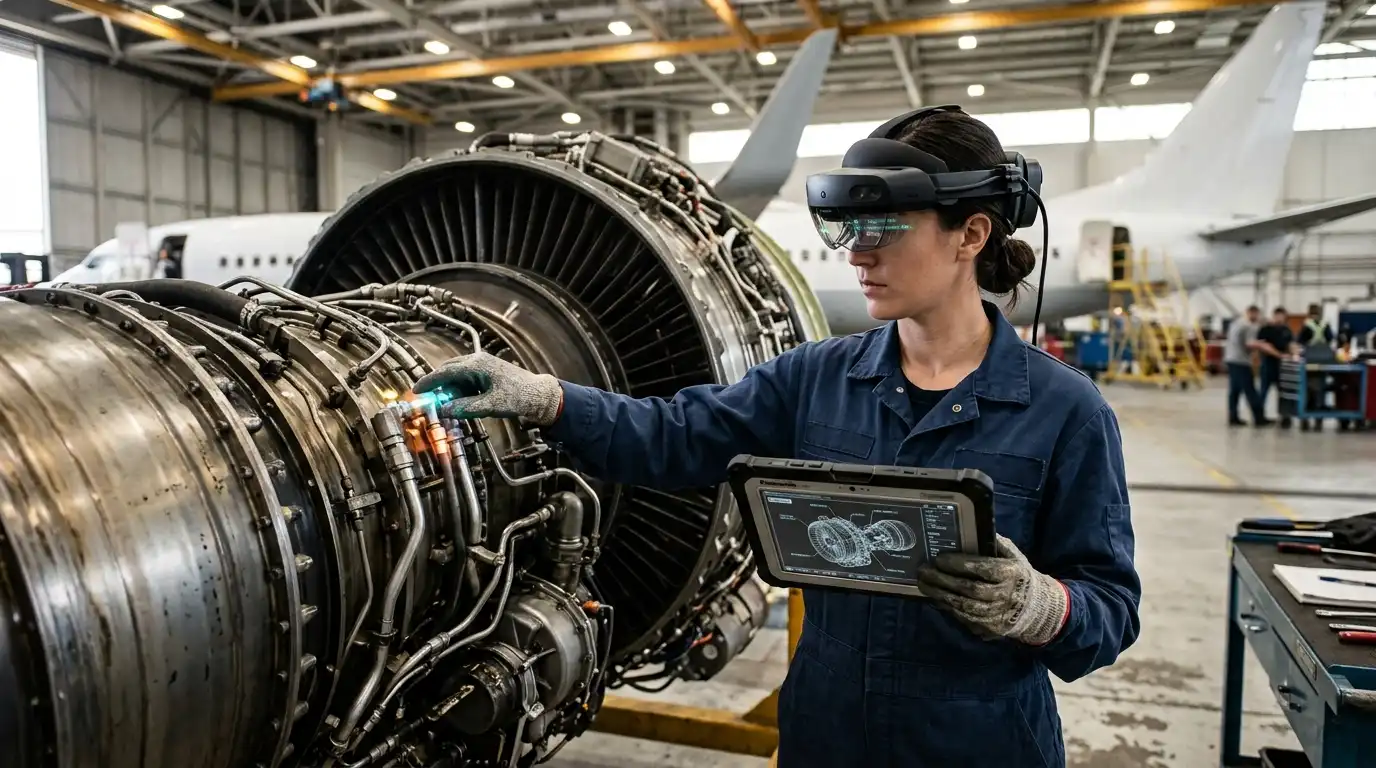
| Industrial & Technical Training | Interactive procedural guides for heavy machinery operation, high-risk maintenance simulations (e.g., aviation turbines, electrical grids), and surgical simulators leveraging virtual reality development with haptic feedback. | Eliminates safety risks during training, minimizes physical equipment wear, and standardizes validation of standard operating procedures (SOPs). |
| Marketing & Sales Enablement | Interactive 3D product configurators, virtual showrooms with real-time dynamic lighting, and spatial audio-guided brand narratives accessible via WebXR. | Extends user dwell times, increases digital conversion rates, and reduces sales cycle duration for high-value physical goods. |
| Real Estate & Architecture | Photorealistic architectural walkthroughs, integration of Building Information Modeling (BIM) data directly into spatial visualizations, and virtual staging. | Facilitates remote property buying, resolves design conflicts before construction begins, and aligns cross-functional stakeholders. |
| Retail & E-commerce | Virtual try-on systems utilizing real-time face tracking and body pose estimation, interactive virtual storefronts, and in-store AR spatial navigation overlays. | Reduces product return rates, enhances online shopping confidence, and bridges the gap between digital and physical commerce. |
Why Choose Muteki Group for AR/VR Development?
Our engineering standards ensure that we build spatial software designed to run efficiently on resource-constrained hardware. With over 200 successfully completed projects, we combine Agile methodology with strict engineering controls (such as continuous profiling, strict code review, and automated integration testing). By leveraging our vast network of 250,000 developers in Ukraine and an in-house core team of over 80 senior engineers, we rapidly assemble specialized teams of graphics programmers, 3D artists, technical animators, and backend developers tailored to your project requirements. Our methodology reduces time-to-market for enterprise virtual reality development and custom AR/VR development while keeping budgets predictable.

“In the landscape of digital transformation, spatial computing is not merely an alternative display medium—it is a fundamental shift in how humans interact with digital information. Success in this field requires strict attention to performance optimization, low latency, and intuitive spatial interface design.”
Muteki Group’s Technical Edge in Virtual Reality Development
We leverage a specialized technology stack selected to ensure high frame rates, visual fidelity, and robust performance across all target devices:
- Game Engines & Real-Time Rendering:
- Unity: Our primary engine for cross-platform AR/VR development (Meta Quest, Apple Vision Pro, Pico, mobile devices). We use C#, Universal Render Pipeline (URP), and OpenXR standards. You can read more about Unity’s capabilities on the official Unity Technologies platform.
- Unreal Engine: Used for high-fidelity virtual reality development projects requiring photorealistic rendering, utilizing C++, Nanite virtualized geometry, and Lumen dynamic global illumination for advanced simulations.
- WebXR & Interactive 3D Web:
- Three.js / Babylon.js / A-Frame: We build lightweight, browser-native 3D, AR, and VR experiences utilizing WebGL and WebGPU APIs. These run instantly without requiring application installation. Developers interested in web-based immersive experiences can review the W3C WebXR Device API Specification.
- Device-Native Mobile AR:
- ARKit (iOS) & ARCore (Android): For mobile-first AR applications. We harness native features including LiDAR plane detection, depth APIs, face tracking, and lighting estimation.
- Swift & Kotlin: For building native application wrappers, integrating device sensors, and implementing platform-specific utility layers.
- Asset Optimization & Performance Profiling:
- We optimize 3D assets for target platforms, utilizing mesh decimation, Level-of-Detail (LOD) generation, draw call batching, texture atlas creation, ASTC/ETC2 compression, and custom GPU shader optimization to maintain target frame rates (72Hz, 90Hz, or 120Hz depending on the target HMD). Efficient asset processing is a cornerstone of modern AR/VR development.
The AR/VR Development Lifecycle
We operate as a full-cycle software engineering partner. Our structured development lifecycle guarantees that your project transitions smoothly from initial requirements gathering to live operation:
- Discovery & Technical Specification: We define hardware targets, user interaction guidelines, software architecture, performance thresholds, and data flow.
- Asset Pipeline & Scene Setup: Our team ingests, optimizes, and structures 3D models, textures, animations, and spatial audio resources.
- Core Interaction & Logic Engineering: We write the core software logic, integrate spatial UI, develop locomotion systems, and configure physics engines for robust virtual reality development.
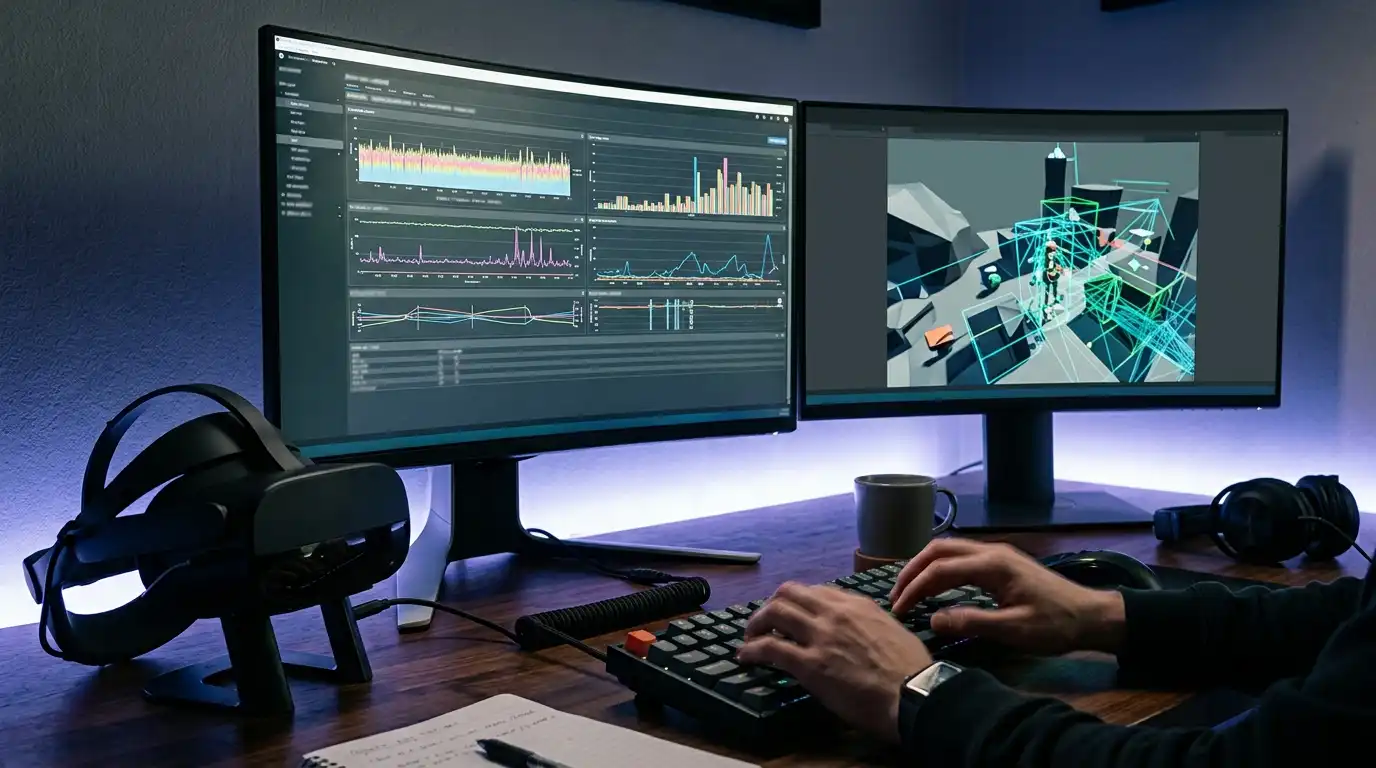
- Performance Profiling & Testing: We profile performance, optimize draw calls, eliminate CPU/GPU bottlenecks, and conduct comfort tests to ensure a smooth, latency-free experience. High-quality profiling is essential to professional AR/VR development.
- Deployment & Release Management: We manage store submissions (Meta Quest Store, Apple App Store, Google Play, SteamVR) and configure cloud hosting for WebXR applications.
Frequently Asked Questions (FAQ)
What is the typical timeline for an enterprise AR/VR and virtual reality development project?
TIMELINE: The duration of an enterprise project depends heavily on its scope. A standard proof-of-concept or MVP in VR typically takes 4 to 8 weeks to design and deploy. A comprehensive, production-ready spatial computing application involving custom 3D modeling, multiplayer networking, and complex backend integration generally spans 3 to 6 months.
Which engine is better for my project: Unity or Unreal Engine?
ENGINE SELECTION: Unity is highly recommended for cross-platform deployments (targeting standalone HMDs like Meta Quest, Apple Vision Pro, mobile AR, or WebXR) due to its broad device compatibility and optimized rendering pipeline. Unreal Engine is selected primarily for high-end tethered desktop or console deployments that demand photorealism and heavy physics simulation.
How does Muteki Group optimize 3D assets to prevent simulator sickness?
OPTIMIZATION: Simulator sickness occurs when the refresh rate drops or latency increases. During AR/VR development, we adhere to strict hardware performance budgets. We use mesh decimation, Level-of-Detail (LOD) generation, and draw-call batching to optimize 3D model complexity, ensuring the application maintains a stable refresh rate (at least 72Hz to 90Hz) on target standalone head-mounted displays.
Can you integrate AR/VR applications with our existing databases and IoT networks?
INTEGRATION: Yes. We build low-latency interfaces using protocols such as WebSockets, MQTT, and gRPC. This allows us to sync real-time sensor telemetry, asset information, and digital twin models between your corporate databases and the spatial frontend.
Do users need to install an app to experience augmented reality?
DEPLOYMENT: No, not always. For quick-access activations, we build WebXR experiences that run natively inside standard mobile web browsers without any app installation. However, for complex enterprise systems requiring precise room mapping, persistence, or advanced hand tracking, a native app wrapper is recommended.
To learn more about how we can execute your spatial computing initiatives, contact our technical team at mutekigroup.com/contact-us.